2026 Top Carbon Facial Machine Types for Global Buyers
The 2026 market offers more Carbon Facial Machine choices than ever, including portable systems, clinic-grade platforms, and multifunctional devices. Each type serves different buyers, treatment settings, and operating budgets. A compact machine may suit a beauty studio with limited space. A higher-powered platform may better support dermatology clinics with trained professionals and stronger maintenance resources.
This guide examines key machine types through practical buying criteria, not promotional claims. It considers laser wavelength, pulse control, cooling performance, carbon lotion compatibility, treatment speed, and user interface design. Reliable suppliers should provide technical specifications, operator training, warranty terms, and documented quality-control procedures. Regional certification requirements also matter, because acceptable equipment standards can differ between countries and local authorities.
Real-world experience often reveals details missing from product pages. A noisy cooling fan can affect client comfort. A difficult-to-clean handpiece may slow daily operations. Replacement filters, protective eyewear, and service response times can influence long-term ownership costs. These details deserve attention. No single Carbon Facial Machine fits every global buyer, and advertised performance should not replace professional assessment. Some comparisons remain imperfect because manufacturers disclose different testing methods. Buyers should verify claims independently, request demonstrations, and review safety instructions before purchase. This overview provides a clearer framework for comparing machine types in 2026, while recognizing that clinical suitability depends on trained evaluation, client needs, and local compliance.
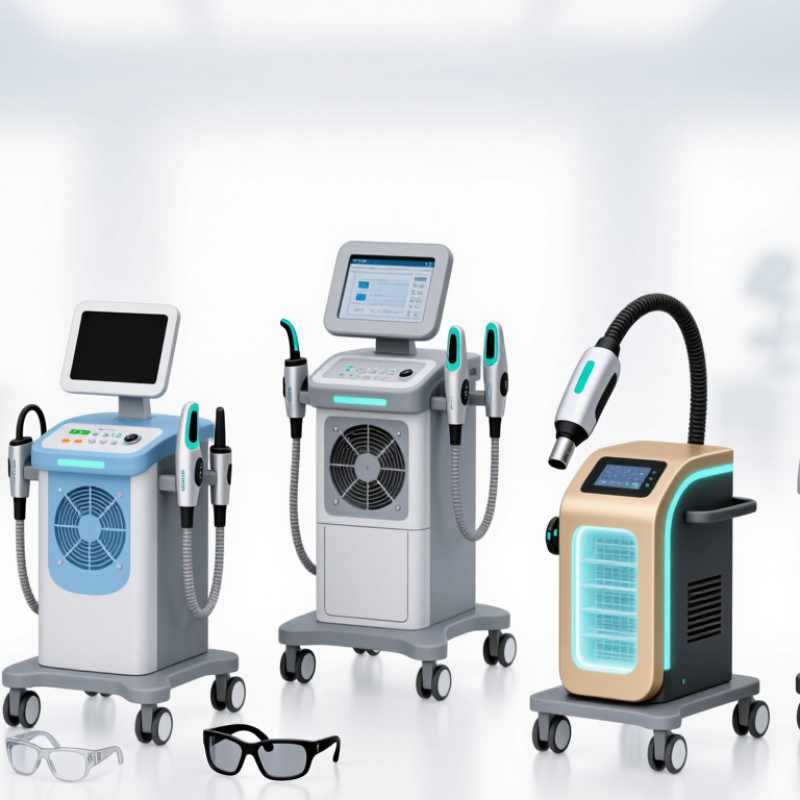
Carbon Facial Machine Types and Their Core Treatment Methods
2026 Top Carbon Facial Machine Types for Global Buyers
Carbon facial machines vary by their energy source, handpiece design, and treatment sequence. The most established type combines a carbon lotion with a Q-switched Nd:YAG laser. The lotion settles into pores and uneven surface texture. Short laser pulses heat and remove the carbon layer. This may help reduce surface oil, dullness, and mild congestion. The effect is usually refreshed skin, not permanent scar removal.
Some systems use a long-pulse laser instead. They deliver controlled heat deeper into the skin. Practitioners may choose this method for oil regulation or general texture support. Other machines combine carbon treatment with hydrodermabrasion, cooling, oxygen infusion, or radiofrequency. These added methods change the treatment experience. They do not automatically improve clinical results. The carbon step remains mainly a light-based exfoliation and thermal treatment.
Buyers should check wavelength, pulse settings, cooling control, maintenance records, and operator training. A clear treatment protocol matters more than a crowded feature list. Skin assessment should identify active irritation, recent peeling, pigment sensitivity, and unsuitable medical conditions. Protective eyewear is essential during laser procedures. In practice, results vary with carbon formulation, skin type, energy level, and aftercare. I would not describe every carbon facial as painless or risk-free. Some clients experience warmth, redness, or temporary dryness. Better documentation and realistic claims remain necessary.
How Carbon Facial Machines Work: Laser, Carbon Lotion, and Skin Interaction
2026 Top Carbon Facial Machine Types for Global Buyers
Carbon facial machines usually combine a 1064 nm Q-switched laser with a carbon-based lotion. The lotion spreads across the skin like a thin charcoal film. It collects surface oil and debris inside pores. Short laser pulses then heat the carbon particles. Their rapid vaporization can loosen superficial buildup and create gentle exfoliation. The laser also delivers controlled thermal energy to the upper skin layers. Results may include smoother texture and a temporarily brighter appearance.
The technology is not one single machine category. Standard Q-switched systems remain common for carbon peeling. Picosecond systems offer shorter pulses, but stronger marketing does not automatically mean better outcomes. Buyers should examine pulse duration, fluence control, cooling, spot size, and treatment records. The ISAPS International Survey on Aesthetic/Cosmetic Procedures 2023 reported 19.1 million nonsurgical procedures worldwide. That figure shows strong demand, not proof that every carbon treatment works equally well.
Clinical judgment matters. Practitioners should check skin sensitivity, active inflammation, recent exfoliation, and pigment history. Darker skin may need conservative settings and careful follow-up because temporary post-inflammatory pigmentation can occur. Protective eyewear is essential. Local device authorization and electrical safety documentation also deserve verification. Carbon lotion quality matters too. Its particle size, purity, and removal behavior affect treatment consistency. Some results remain subjective. A brighter mirror image is not always measurable skin improvement.
Key Features and Technical Specifications of Carbon Facial Equipment
2026 Top Carbon Facial Machine Types for Global Buyers
Carbon facial equipment is commonly built around a Q-switched 1064 nm Nd:YAG laser. This wavelength supports carbon-particle removal and controlled photoacoustic energy delivery. Typical systems offer 1–10 Hz repetition rates, adjustable spot sizes, and fluence ranges near 0.5–2 J/cm². Actual settings vary by skin condition, carbon mask, and treatment area. Buyers should request verified output data, not rely on attractive screen values.
The main machine types include compact tabletop units, wheeled clinic systems, and multifunction platforms. Tabletop models save space and simplify maintenance. Wheeled systems usually provide better cooling, larger interfaces, and more stable operation during busy sessions. Multifunction devices may combine laser, spray cooling, or oxygen-related features, but extra functions can increase service complexity. A useful inspection includes pulse consistency, emergency-stop access, handpiece durability, and cooling performance after repeated shots.
The ISAPS Global Survey 2023 recorded about 19.1 million non-surgical aesthetic procedures worldwide, showing strong demand for practical skin treatments. This growth does not guarantee equal technical quality. Equipment should align with IEC 60601-1 electrical safety requirements and ISO 14971 risk-management principles where applicable. Ask for calibration records, optical energy testing, user training, and local regulatory documentation. Some suppliers publish incomplete specifications. That is a problem. A quiet fan, clear warning labels, and stable pulse delivery often matter more than a crowded feature list.
2026 Top Carbon Facial Machine Types for Global Buyers
Key Features and Technical Specifications of Carbon Facial Equipment
The chart compares representative operating wavelengths used in carbon facial equipment. Q-switched and picosecond Nd:YAG systems commonly operate at 1064 nm for carbon lotion vaporization and superficial photothermal treatment. Some dual-wavelength systems also provide 532 nm, while 755 nm picosecond systems are used for selected pigmentation and rejuvenation applications. Actual pulse duration, fluence, spot size, and cooling performance vary by configuration and treatment protocol.
Professional and Home-Use Carbon Facial Machine Applications
Professional carbon facial machines are commonly used for carbon laser peels, pore care, and surface exfoliation. A trained practitioner should assess skin sensitivity, pigmentation, active irritation, and recent cosmetic procedures before treatment. Eye protection is essential. So is careful energy control.
In a clinic, the operator can adjust pulse settings, carbon-layer thickness, and treatment spacing. Clean equipment, documented consultations, and proper ventilation support safer practice. Results vary. Oily skin may appear smoother, while uneven pigmentation often needs a longer plan. The process is not always dramatic. Some clients experience temporary redness, warmth, or dryness.
Home-use carbon facial machines usually operate at lower intensity and require simpler routines. Users should follow the device instructions, avoid broken skin, and test a small area first. Regular cleansing and sunscreen remain important after treatment. A home device cannot replace professional assessment for persistent acne, unusual pigmentation, or sensitive skin. Consumers should check electrical certifications, usage limits, warranty terms, and local safety requirements. Cheap options can be misleading. Even professional users should review treatment records and question settings that seem unnecessarily aggressive.
How Global Buyers Can Select the Right Carbon Facial Machine
2026 Top Carbon Facial Machine Types for Global Buyers
How Global Buyers Can Select the Right Carbon Facial Machine
Global buyers should match the machine to treatment goals, not attractive specifications. Most carbon facials use a Q-switched 1064 nm Nd:YAG laser with a carbon lotion. Some systems add cooling, adjustable spot sizes, or multifunctional handpieces. These features affect comfort, treatment speed, and operator control. I would not select a machine from power numbers alone. Clinical settings, training, and skin assessment matter more.
Demand is strong across non-surgical aesthetics. The ISAPS 2023 Global Survey recorded over 19 million non-surgical procedures worldwide. Grand View Research also forecasts continued growth in the global medical aesthetics market through 2030. These figures show opportunity, but they do not prove every carbon facial machine will perform equally. Buyers should request independent test records, wavelength verification, pulse stability data, and service response times. Check local registration requirements before importing. Do not guess.
Tips: Compare energy ranges, pulse modes, cooling performance, and replacement-part availability. Ask for operator manuals and maintenance schedules. Test a sample unit on suitable skin models under qualified supervision. A low purchase price can become expensive when calibration support is weak. Also inspect the handpiece cable, screen controls, and emergency stop. Small faults become inconvenient quickly.