Why Do Global Buyers Choose Support Belts?
Why Do Global Buyers Choose Support Belts?
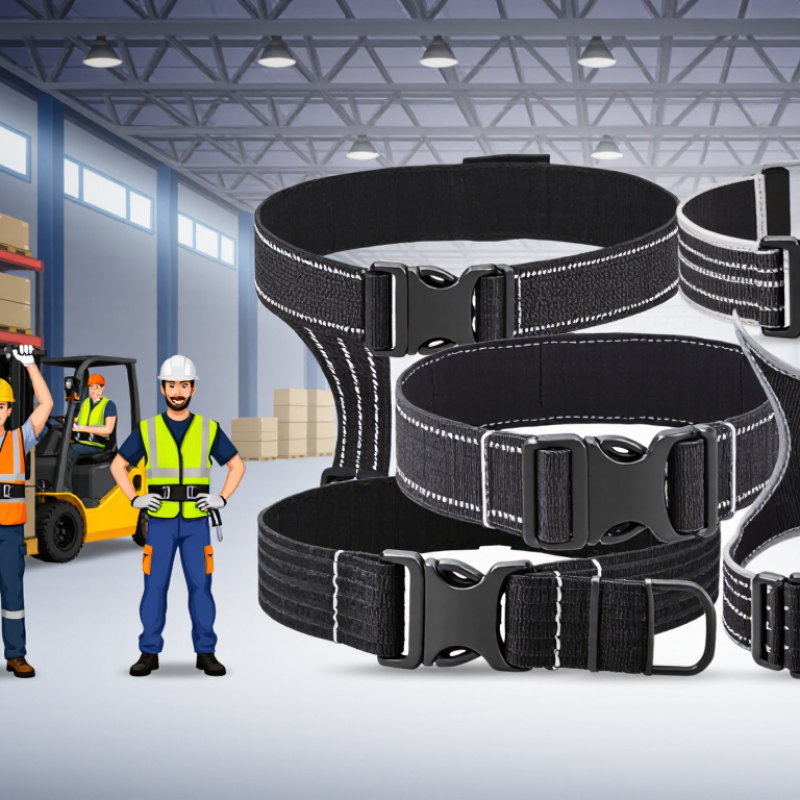
Global buyers choose support belts for practical reasons, not because one product fits every worker. In warehouses, construction sites, farms, and transport operations, workers may lift, bend, stand, or drive for long periods. A well-designed belt can provide a feeling of abdominal support and remind users to control their posture. It cannot remove every workplace risk. The work still matters.
Dr. Stuart McGill, a respected spine biomechanics researcher, has warned, “A belt is not a substitute for proper lifting technique.” This principle should guide every purchase. Buyers often examine adjustable sizing, breathable fabric, strong stitching, secure closures, and comfort during repeated movement. They also compare supplier testing, material traceability, labeling, and after-sales support. Small details become important. A belt that slips during a busy shift may be ignored, regardless of its advertised strength.
International purchasers also consider consistent quality across different batches. They may request samples, user trials, inspection records, and clear care instructions before placing larger orders. These steps reflect experience rather than marketing optimism. Yet the decision is rarely perfect. Comfort feedback can differ between workers, body shapes, climates, and job tasks. Some buyers may also overestimate what support belts can achieve. That assumption deserves review. The most reliable choice combines suitable product design, worker training, sensible load handling, and a broader ergonomic assessment. In this context, support belts are one practical tool, not a complete safety solution.
What Are Support Belts? WHO Reports 619 Million People Had Low Back Pain in 2020
Why Do Global Buyers Choose Support Belts?
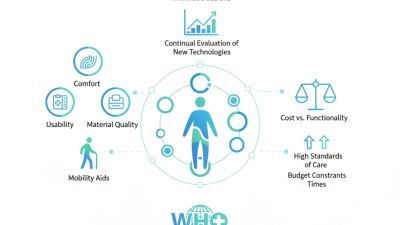
WHO reported that 619 million people had low back pain in 2020. This figure shows why support belts attract global buyers. Many people work at desks, lift goods, drive long hours, or travel frequently. A support belt may add gentle compression around the waist. It can also remind users to maintain a more careful posture during movement.
However, a belt is not a cure. Clinical guidance usually treats it as one part of a broader plan, including movement, rest, and professional assessment. A useful belt should feel secure without restricting breathing or normal walking. Buyers should check sizing, material, fastening strength, and return policies. Comfort differs between bodies. That detail is often overlooked.
Tips: Wear the belt for suitable activities, not all day without advice. Start with short periods and check for numbness, skin irritation, or increased pain. Do not tighten it excessively. If pain follows an injury, spreads down the leg, or causes weakness, seek qualified medical care. Some buyers expect instant support, but results can be modest. The belt may help confidence more than strength. That is worth considering.
Why Do Global Buyers Choose Support Belts?
Support belts are commonly used to provide temporary lumbar support and may help some people feel more stable during daily activities. The global burden of low back pain has increased substantially, creating broader demand for practical support and pain-management solutions.
Data source: World Health Organization (WHO), which reported 619 million people living with low back pain in 2020 and projected approximately 843 million by 2050. The 1990 estimate is based on global burden-of-disease research.
How Workplace Musculoskeletal Disorders Drive Global Support-Belt Demand
Why Do Global Buyers Choose Support Belts?
Workplace musculoskeletal disorders are intensifying demand for support belts worldwide. The World Health Organization estimates that 1.71 billion people live with musculoskeletal conditions globally (WHO, 2022). Lower back pain remains the largest contributor to disability in many working-age populations. Repeated lifting, prolonged standing, and awkward posture often create the problem.
The workplace impact is visible. EU-OSHA reports that roughly three in five European workers experience musculoskeletal complaints. These conditions can increase absence, reduce concentration, and raise operational costs. Buyers often choose support belts for temporary trunk support, body-awareness cues, and confidence during demanding tasks. However, evidence does not prove that belts alone prevent injuries. That matters. A belt cannot correct poor lifting design or excessive workloads.
Tips: Treat a belt as one control, not the whole solution. Check sizing, breathability, and adjustable compression. Workers should receive fitting guidance and task-specific training. Employers should also review lifting height, load weight, rest breaks, and mechanical assistance. The NIOSH lifting equation can help assess manual-handling risk. Comfort is practical, but comfort may create false confidence. Regular feedback is still necessary.
Sources: World Health Organization, Musculoskeletal Health, 2022; European Agency for Safety and Health at Work, Work-related Musculoskeletal Disorders: Prevalence, Costs and Demographics in the EU, 2019.
Why Do Global Buyers Choose Support Belts? - How Workplace Musculoskeletal Disorders Drive Global Support-Belt Demand
| Geographic Scope |
Workplace or Health Indicator |
Latest Reported Value |
Reference Year |
Implication for Support-Belt Demand |
Source |
| Global |
People living with musculoskeletal conditions |
Approximately 1.71 billion people |
WHO, 2022 |
A large global population experiences pain, reduced mobility, or functional limitations, creating broad interest in non-invasive ergonomic support products. |
WHO |
| Global |
Low-back-pain prevalence |
619 million people in 2020; projected to reach 843 million by 2050 |
2020 / 2050 projection |
The long-term increase in low-back-pain cases supports demand for preventive workplace practices, lifting assistance, and lumbar-support products. |
WHO |
| European Union |
Workers reporting musculoskeletal disorders |
About 3 in 5 workers |
EU-OSHA, 2019 survey reporting |
High employee exposure to back, neck, shoulder, and upper-limb problems encourages employers to consider wearable support as part of broader ergonomic programs. |
EU-OSHA |
| United Kingdom |
Workers with work-related musculoskeletal disorders |
511,000 workers |
2023/24 |
A substantial number of affected workers creates demand for practical measures aimed at reducing physical strain during manual handling and repetitive work. |
HSE |
| United Kingdom |
Working days lost because of work-related musculoskeletal disorders |
6.8 million working days |
2023/24 |
Lost productivity gives employers a measurable reason to invest in prevention, employee comfort, and equipment that may help workers maintain safer movement patterns. |
HSE |
| United States |
Days-away-from-work cases involving overexertion or bodily reaction |
Approximately 1.06 million cases |
2022 |
The scale of overexertion-related injuries strengthens demand for manual-handling training, task redesign, and supportive wearable equipment. |
U.S. BLS |
| Workplace Applications |
Common physical risk factors |
Heavy lifting, repetitive motion, awkward postures, pushing, and pulling |
Consistent across occupational-health guidance |
These tasks are the main use cases for support belts in logistics, warehousing, construction, manufacturing, healthcare, agriculture, and retail environments. |
WHO |
| Buyer Priorities |
Typical reasons for selecting a support belt |
Comfort, adjustability, mobility, breathability, and ease of use |
Derived from ergonomic purchasing criteria |
Buyers generally seek products that complement—not replace—risk assessment, safe lifting procedures, training, rest breaks, and workplace redesign. |
EU-OSHA |
Data note: The figures above describe musculoskeletal-disorder prevalence, injury burden, and productivity impact. They are not company-level sales figures or direct market-size estimates. Support belts should be used as one element of a comprehensive ergonomic and occupational-safety program.
How FDA Classification and ISO 13485 Shape Support-Belt Manufacturing Standards
Why Do Global Buyers Choose Support Belts?
How FDA Classification and ISO 13485 Shape Support-Belt Manufacturing Standards
Global buyers often examine support belts through a regulatory lens.
A belt may be classified as a medical device when its intended use supports treatment, recovery, or body function. The FDA classification affects risk level, controls, labeling, and possible market-entry requirements. It is not simply a quality badge.
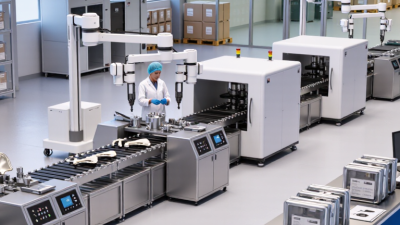
This distinction matters on the factory floor. Manufacturers must connect design inputs with measurable performance. They may test tensile strength, seam durability, material safety, and adjustment stability. A clear device history record can show what happened to each production batch. Small details matter, such as needle tension, edge finishing, and the force needed to close a fastening system.
ISO 13485 adds a structured quality-management framework.
It covers risk management, supplier control, document updates, training, complaints, and corrective actions. Buyers can inspect whether procedures are actually followed, not merely written. That evidence builds trust across different markets. Still, certification alone cannot guarantee every belt performs perfectly. Human sizing errors, inconsistent wear, and changing clinical needs remain difficult variables. Some processes may look efficient but deserve another review. A reliable manufacturer measures those weaknesses and improves them before they affect users.