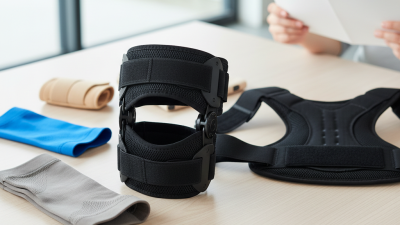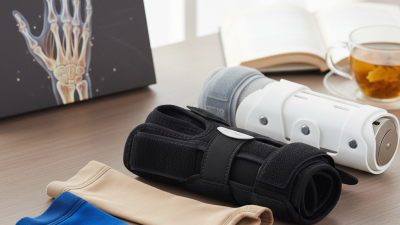
Choosing the right wrist compression support begins with a simple question: What problem are you trying to manage? A brace for typing may feel very different from one used during lifting, tennis, or recovery after an injury. The best choice should provide gentle, even pressure without causing numbness, throbbing, or cold fingers. Fit matters more than appearance.
Hand and wrist specialist Dr. Donald H. Lalonde offers a useful reminder: “Pain is not something to push through; it is a signal to understand.” This principle applies to wrist compression. Support can help limit swelling, improve comfort, and remind the wrist to stay aligned. It cannot diagnose a fracture, tendon tear, nerve problem, or persistent inflammation. That distinction is easy to forget.
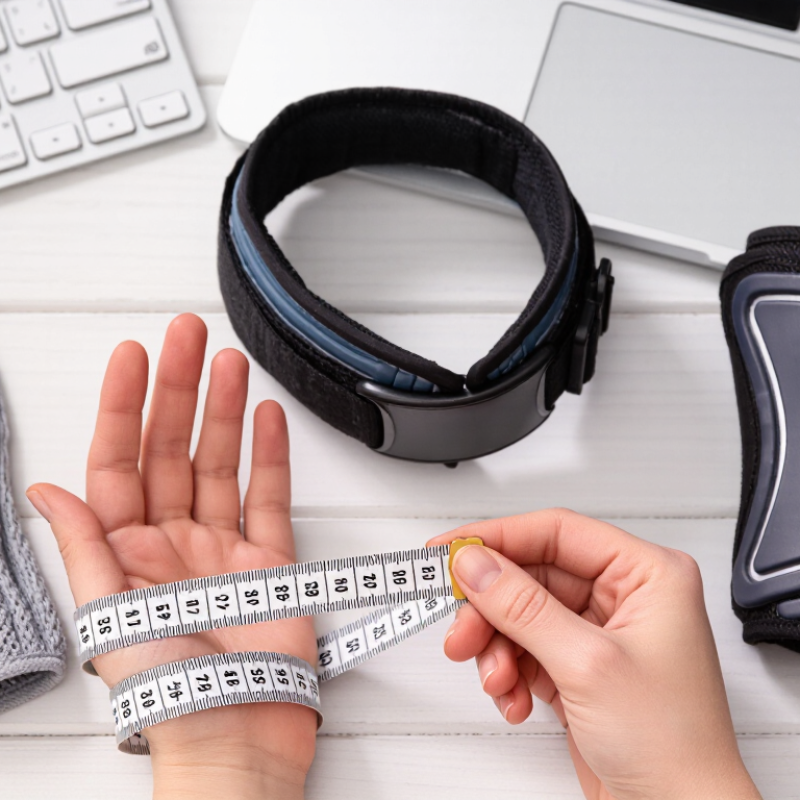
Look for breathable fabric, adjustable fastening, and enough flexibility for daily movement. A support that leaves deep marks after twenty minutes may be too tight. One that slips while opening a jar is probably too loose. Measure your wrist carefully, preferably at the narrowest point, and compare it with the manufacturer’s chart. Small details matter.
Your activity matters, too. A lightweight sleeve may suit desk work. A structured brace may offer better control during demanding tasks. However, stronger is not always better. I have seen people choose maximum compression and then wonder why their hands tingle. That choice deserves reflection.
Use wrist compression as one practical tool, not a complete treatment plan. If pain lasts, worsens, or follows a significant impact, seek qualified medical advice. Comfort is helpful. Clear assessment is safer.
How to Choose the Right Wrist Compression Support?
Carpal tunnel syndrome affects an estimated 3–6% of adults, according to the National Institute of Neurological Disorders and Stroke (NINDS). It develops when the median nerve is compressed inside the wrist’s narrow carpal tunnel. Tingling in the thumb, index, and middle fingers can appear at night. Weak grip may follow.
A suitable wrist support should keep the wrist neutral, not tightly bent. NINDS and clinical guidance from the American Academy of Orthopaedic Surgeons support nighttime splinting for some people with mild symptoms. Look for breathable fabric, adjustable fastening, and a firm palm stay. Your fingers should move freely. Numbness should not increase.
Compression alone is not treatment. A brace that leaves deep marks is probably too tight. Pain can also come from the neck, tendon irritation, or another nerve problem. That distinction is easy to miss. If symptoms persist, spread, or cause dropping objects, seek assessment from a qualified healthcare professional. Research supports conservative care, but responses vary between individuals.
Tips: Measure your wrist carefully. Wear support during sleep first. Remove it if color changes, swelling, or sharper pain appears. Keep the wrist straight while typing, and take brief movement breaks. Do not rely on discomfort as proof that the support is working.

Choosing the right wrist compression support starts with position, not pressure. The American Academy of Orthopaedic Surgeons, or AAOS, commonly advises keeping the wrist neutral. This means the hand stays in line with the forearm. It should not bend upward or downward.
Place your forearm on a table. Let your fingers rest naturally. The support should hold this straight alignment without forcing your hand. I once chose a tighter brace, thinking more compression meant better support. My fingers became cool, and the fit felt distracting. That was a useful mistake. Firm does not mean painful.
Look for gentle, even contact around the wrist. The material should feel secure during typing, lifting, or sleeping. You should still move your fingers freely. Check for tingling, numbness, swelling, or skin color changes. Loosen the support if these signs appear. A brace that shifts may need a different size or design, not tighter straps. Small adjustments matter.
AAOS guidance can help, but your symptoms still need attention. Wrist pain may come from irritation, injury, or another condition. Persistent pain, weakness, or numbness deserves evaluation by a qualified healthcare professional. Use compression support as part of careful management, not as a replacement for diagnosis.
A neutral wrist keeps the hand aligned with the forearm, avoiding unnecessary flexion, extension, or side deviation. The chart shows approximate typical active wrist motion limits in healthy adults; these values describe available movement, not recommended support-position angles. When fitting a compression support, choose a design that stabilizes the wrist close to neutral without restricting circulation.
Measurement unit: degrees from the neutral wrist position. Individual mobility may vary.
How to Choose the Right Wrist Compression Support?
A wrist support should not be chosen by its mmHg number alone. Unlike medical compression stockings, wrist supports lack a universal pressure classification. EN 13485 defines testing requirements for medical compression hosiery, but it does not standardize ordinary wrist braces. Pressure also changes with wrist size, fabric stretch, swelling, and hand movement. A support marked “20 mmHg” may not deliver that pressure at your wrist.
Check the measurement details. Reliable documentation should identify the testing location, wrist circumference, material tension, and pressure range. Without these details, the number is incomplete. Start with gentle, even support during typing, lifting, or repetitive work. Your fingers should stay warm, pink, and mobile. Numbness, tingling, throbbing, or cold fingertips means the fit needs immediate review.
Evidence also deserves careful reading. A Cochrane review examined 19 studies involving 1,984 people with carpal tunnel syndrome. It found possible benefits from wrist splinting, but the evidence quality was low and pressure levels varied. That matters. A tighter support is not automatically better. I would also question any product promising a precise therapeutic effect without independent testing. If symptoms persist, seek assessment from a qualified clinician rather than increasing compression yourself.
| Selection Dimension | What the Data or Evidence Indicates | What to Look For | Practical Recommendation |
|---|---|---|---|
| Pressure rating | There is no universally adopted mmHg classification or mandatory pressure-labeling system for ordinary wrist compression supports. Actual pressure depends on fabric elasticity, support size, wrist shape, construction, and how tightly the support is worn. | Treat any stated mmHg value as product-specific rather than directly comparable with another support. | Do not choose solely by a numerical pressure claim. Compare fit, comfort, intended use, and measurable product information. |
| Reference compression ranges | For context, compression garments are often described using approximate ranges such as mild: about 15–20 mmHg, moderate: about 20–30 mmHg, and higher compression: above 30 mmHg. These ranges are not a universal rating system for wrist braces. | Check whether the measurement was taken at the wrist, under specified conditions, and by a recognized test method. | Use these ranges only as general background, not as a substitute for professional fitting or product-specific testing. |
| Intended purpose | A soft compression sleeve mainly provides gentle pressure, warmth, and proprioceptive feedback. A wrist brace with a splint adds mechanical restriction and is a different type of support. | Identify whether the goal is comfort during activity, swelling management, post-injury protection, or limiting wrist motion. | Choose a sleeve for light support and mobility; choose a structured brace only when motion control is appropriate. |
| Wrist measurement | Most supports are sized by wrist circumference, although some designs also require hand or forearm measurements. A small difference in circumference can change the applied pressure. | Measure the wrist at the location specified in the fitting instructions, using a flexible tape without compressing the skin. | Select the correct size range rather than deliberately sizing down to increase tightness. |
| Fit and pressure distribution | A support should feel secure without creating focal pressure points. Wrinkles, rolled edges, or uneven tension can concentrate pressure and cause discomfort. | Look for smooth fabric, a stable edge, adequate thumb or hand clearance, and no pinching during normal movement. | Reposition or remove the support if it rolls, causes numbness, or leaves pronounced marks that persist after removal. |
| Material and breathability | Synthetic elastic fibers can provide stretch and recovery, while moisture-wicking or breathable constructions may improve comfort during extended wear. Material performance varies by design. | Check fiber content, seam placement, ventilation, wash instructions, and possible skin sensitivities. | For exercise or warm environments, prioritize breathable construction and moisture management. |
| Signs of excessive compression | Increasing pain, tingling, numbness, unusual coldness, pale or bluish fingers, or reduced finger movement can indicate that the support is too tight or unsuitable. | Check finger color, temperature, sensation, and movement after putting on the support and during use. | Remove the support if these symptoms occur. Seek medical advice if symptoms continue or are severe. |
| Medical conditions | People with circulation problems, reduced sensation, unexplained swelling, open wounds, infection, or recent surgery may require individualized guidance before using compression. | Review the product warnings and consider advice from a clinician or qualified therapist. | Do not use stronger compression to treat unexplained symptoms without professional assessment. |
| How to compare products | A meaningful comparison requires the same measurement location, test conditions, size, material state, and reporting method. A single unlabeled mmHg number is insufficient for a fair comparison. | Look for size-specific pressure data, test-method details, intended-use information, and clear fitting instructions. | When pressure data are unavailable, prioritize transparent sizing information, even tension, comfort, and appropriate clinical guidance. |
Important note: The mmHg ranges shown above are general reference categories used for some compression garments, not a universal standard for wrist supports. Product pressure can vary substantially with size, fit, movement, and measurement method.
A wrist support should feel secure, not punishing. The U.S. Bureau of Labor Statistics reported 1,001,440 musculoskeletal disorder cases involving days away from work in 2022. This figure is not wrist-specific, but it shows why fit deserves attention. Before wearing a support, check the fingers. They should remain warm, normally colored, and easy to move. Numbness is a warning sign. So is tingling.
Measure your wrist according to the product’s instructions, then test the support for ten minutes. You should feel even pressure around the wrist, without a sharp edge near the palm. Try opening your hand, typing, and lifting a light cup. Restricted motion means the support may be too tight or poorly shaped. The NHS advises removing a splint when numbness, color change, or increased pain appears. Do not ignore those signals.
A useful check is simple. Press a fingertip briefly against a fingernail, then release. Color should return quickly, although this is not a medical test. Swelling can also change the fit during the day. Loosen the support and reassess after activity. I have found that “more compression” often feels reassuring, yet it can reduce comfort and control. That assumption needs questioning. Persistent symptoms, weakness, or unusual discoloration require professional assessment rather than a tighter strap.
How to Choose the Right Wrist Compression Support?
Carpal tunnel syndrome often feels worse at night. Fingers may tingle, burn, or wake you beside a cold bedside table. A night splint keeps the wrist near neutral. This position may reduce pressure inside the carpal tunnel.
A Cochrane review examined 19 studies involving about 1,190 participants. It reported possible short-term symptom relief from night splinting. However, the evidence was limited and its certainty remained low. Long-term benefits were unclear. That distinction matters. Relief after two weeks does not prove lasting nerve recovery.
Choose a support that feels firm but not restrictive. Look for a straight wrist position, breathable fabric, and adjustable fastening. Avoid designs that force the wrist backward. Numbness, swelling, pale fingers, or increased pain are warning signs. Remove the support and seek clinical advice.
The American Academy of Orthopaedic Surgeons also recognizes splinting as a non-surgical option. Yet current guidance does not establish one compression level as best for everyone. A tighter fit is not automatically better. In practice, people often over-tighten supports after a painful night. I have seen comfort improve when pressure decreases, not increases. That observation needs humility, because symptoms can change naturally. A qualified clinician should assess persistent numbness, weakness, or dropping objects.
© 2023 Bird & Cronin, LLC. All Rights Reserved.

In observance of the 4th of July holiday, our offices will be closed on July 3rd & 4th.